The liquor industry is obsessed with the strength of a whiskey when it’s bottled: 80 proof, 100 proof, cask strength. But there’s another measure of alcohol potency that’s just as important—if not more—barrel entry proof.
It's the alcohol level of the spirit when it goes into a barrel before aging. While this sounds like a bureaucratic footnote, it’s actually incredibly important for how the alcohol will interact with the wood and how the whiskey will ultimately taste. The barrel is responsible for a huge amount of a whiskey’s flavor. Some experts say up to 80 percent.
By federal regulation, American whiskey can’t have a barrel entry proof above 125. That was increased from 110 in 1962. Why? The higher the barrel entry proof, the fewer barrels and warehouses you need to invest in. You just have to add more water to the whiskey before you bottle it.
When it comes to single malt Scotch, we don’t generally talk about barrel entry proof. American whiskey is generally made in a column still, which is capable of producing incredibly high-proof alcohol. Single malt Scotch, on the other hand, is required to be made in a pot still, which isn't usually capable of producing high-proof spirits.
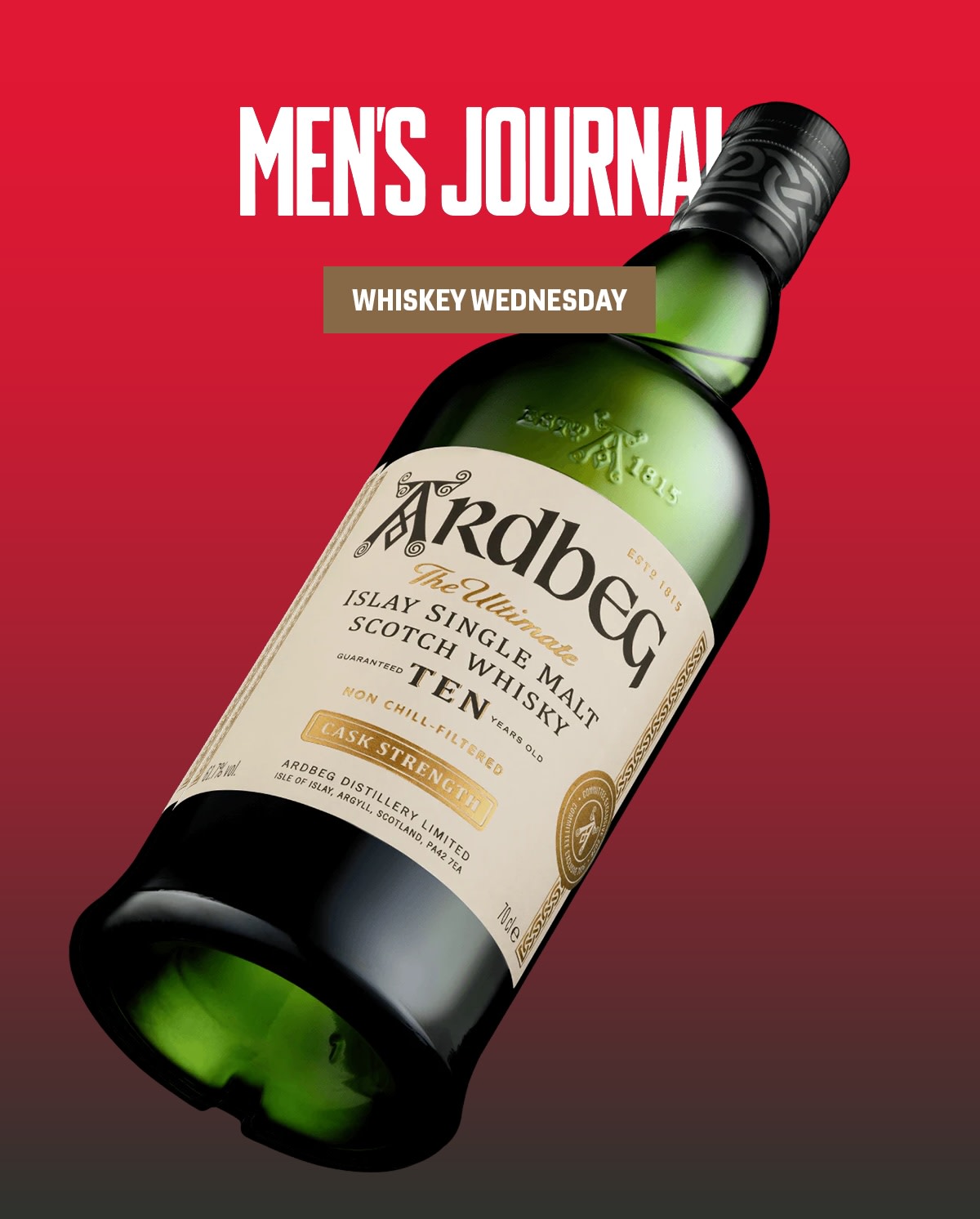
So I was fascinated to hear about Ardbeg’s new limited-edition cask strength version of its award-winning 10-year-old whisky. Dr. Bill Lumsden—one of the great whisky minds of our time and Ardbeg’s director of Distilling and Whisky Creation—intentionally aged a higher-proof spirit to see what would happen. Typically, Ardbeg comes off the still at 142 and is proofed down to 127 before entering the barrel. For this experiment, he didn’t proof it down. The final result is noticeably different from Ardbeg’s standard 10 Year and has more sweet and spice notes. You can read more about the whisky in Gina Pace’s detailed Men’s Journal story.